
Quick Answer
Retail construction work falls into three service types: tenant improvements in leased space, remodels of stores that stay open, and ground-up builds. Each can be delivered as a single-location project or as part of a multi-site program. The right general contractor depends on the mix you need. For rollouts and open-store remodels, weigh four things alongside price: who leads each site day to day, how the team phases work around trading hours, how it keeps a prototype consistent from store to store, and how it closes out. Ask for documented evidence of each before you sign.
$20B
Expected store remodel spending by the largest U.S. retailers this decade
27
States where CORCON has delivered projects for national brands
CORCON
Since 1987
CORCON has been building for retail, restaurant and service brands
CORCON
A national brand rarely needs just one kind of construction. In a single year, a store development team might open new locations in leased mall space, refresh dozens of stores that cannot close, and build a freestanding prototype on a new pad site. Each of those projects asks something different of a general contractor, and the firm that is right for one can be the wrong fit for another.
The pressure on that choice is rising. The largest U.S. retailers are expected to spend about $20 billion remodeling stores this decade, according to The New York Times, as reported by PYMNTS, on top of their new-store programs. Experienced crews, superintendents and project managers are in demand.
This guide compares the main retail construction service types and delivery models, explains what separates a capable multi-site partner from a single-project builder, and lists the evidence buyers should request before choosing a general contractor. It is not a ranked list of contractors. It is a framework for evaluating any of them, including us.
What Are the Main Types of Retail Construction Services?
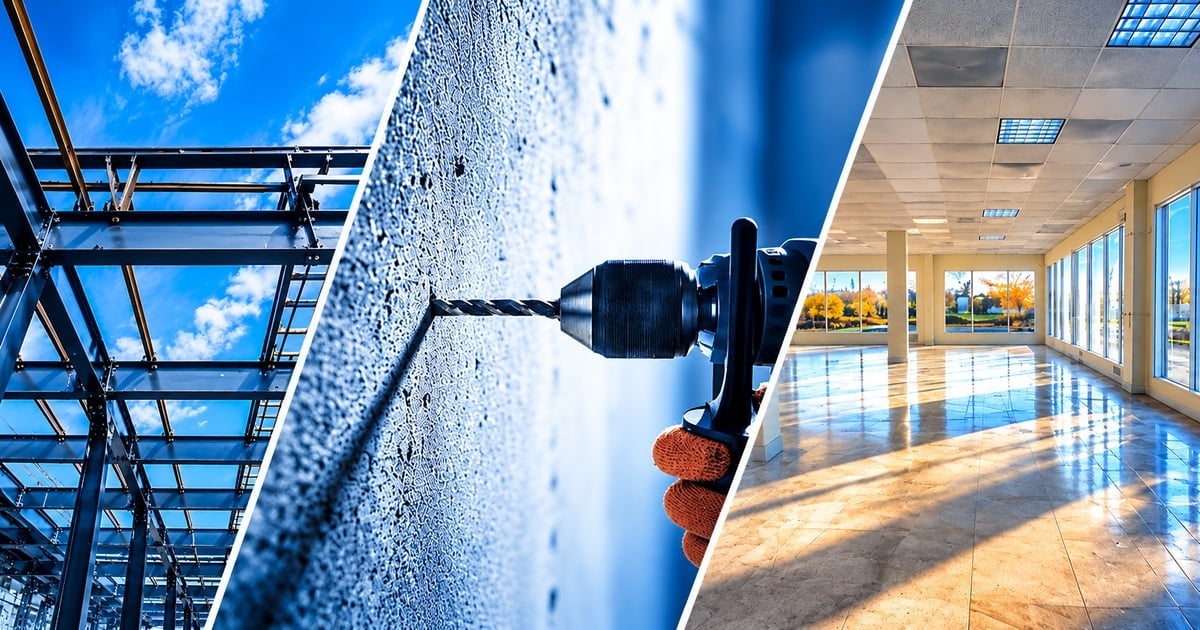
Most retail construction falls into three service types. They often appear in the same program, but the risks and the skills they demand are different.
Tenant Improvements
A tenant improvement builds out the interior of leased space to the brand’s standards. The space might be a mall unit, a strip center bay, a street-front storefront or a second-generation space left by a previous tenant. Typical scope includes demolition, framing, ceilings, lighting, flooring, storefront, fixtures and connections to the landlord’s mechanical, electrical, plumbing and fire protection systems. Risk concentrates in the landlord’s base building and work letter: what the landlord provides, what the tenant must build, and what the existing systems can actually support.
Open-Store Remodels
An open-store remodel updates a location that keeps trading while the work happens. It might be a refresh of finishes and fixtures, a layout change to add in-store pickup, or an expansion into adjacent space. The construction itself is often simpler than a new build. The difficulty is doing it around customers, staff and merchandise without hurting sales or safety, which means phased zones, overnight shifts and a clean sales floor every morning.
Ground-Up Construction
A ground-up project builds a new freestanding store from pad preparation through shell, exterior facade, site development and interior fit-out. It carries risks interior projects do not: utilities, grading and paving, site permits from multiple agencies, weather and a longer schedule. A contractor strong in interiors is not automatically strong on a pad site.
| Service type | What it covers | Where risk concentrates | What to look for |
|---|---|---|---|
| Tenant improvement | Interior buildout of leased space to brand standards | Landlord work letter, existing building systems, mall construction rules | Experience reconciling landlord and brand requirements; field-verified surveys before pricing |
| Open-store remodel | Updates to a store that stays open during construction | Lost sales, customer and staff safety, overnight productivity | Documented phasing plans, night-shift experience, daily turnover standards |
| Ground-up build | New building from pad preparation to fixtures | Site work, utilities, multi-agency permits, weather | Site development and shell experience; a permit strategy for each jurisdiction |
How Is a Multi-Site Rollout Different From a Single-Location Project?
A single-location project has one site, one schedule and one set of drawings. Success means delivering that store well. A multi-site program has many sites, staggered openings, several jurisdictions and one prototype. Success means delivering every store the same way, on a predictable cadence, and getting a little faster and more accurate with each one.
| Factor | Single-location project | Multi-site program |
|---|---|---|
| Primary goal | Deliver one store well | Deliver every store to the same standard on a predictable cadence |
| Estimating | Priced from this design | Standardized estimating against a prototype cost model |
| Reporting | Project-specific updates | One format across every site so the brand can compare |
| Field leadership | One project team | Consistent superintendents and a central program lead |
| Geography | Local trades and inspectors | Licensing, permits and vendors across many states |
| Lessons learned | End at turnover | Feed the next site’s design, budget and schedule |
The question for a buyer is whether a contractor runs a rollout as a program or as a string of unrelated jobs. Licensing and permitting also change at every state line, which is where many regional builders stall. We cover that in more depth in Building Across Multiple States.
Why Does On-Site Leadership Matter So Much?
The superintendent runs the site every day. This is the person who sequences trades, schedules inspections, enforces safety, checks quality against the drawings and talks with the store manager when something changes. On a rollout, the superintendent is also the main reason one store matches the next.
Contractors staff this role in two ways. Some place their own full-time employees on every site. Others subcontract field management to local firms or spread one superintendent across several jobs. Subcontracted management can work on a single project, but across a program it introduces variation in how drawings are read, how substitutions are handled and how problems are reported.
Ask every contractor you evaluate:
- Who will be on site each day, and is that person your employee?
- How many projects will the superintendent carry at the same time?
- Will the same field leaders move with our program from site to site?
- What safety training does site leadership hold?
At CORCON, our own superintendents are on site in every market we serve, and every one holds the Occupational Safety and Health Administration 30-hour certification. Full-time employee oversight, rather than subcontracted management, is how we keep a prototype consistent across locations.
How Should a Contractor Phase an Open-Store Remodel?
A store that stays open during construction is still selling, so the phasing plan matters as much as the drawings. A capable contractor will be able to show you a written plan covering:
- Zones. The store is divided into work areas so customers always have a clean, safe path to shop and check out.
- Overnight work. Noisy, dusty and disruptive tasks happen after close, and the sales floor is restored before opening each morning.
- Temporary moves. Registers, fitting rooms, fixtures and merchandise are relocated in a planned sequence, not on the fly.
- Protection. Dust barriers, floor protection and secure storage keep inventory and finished areas clean.
- Communication. Store leadership knows what is happening each night, and the superintendent is reachable when the store opens.
- Landlord and calendar rules. Construction hours, delivery windows and holiday blackout periods are mapped into the schedule early. See The Black Friday Blackout for how the holiday moratorium affects timing.
The same discipline applies to any space that has to keep serving customers during construction, from clinics to fitness studios. Learn more about our occupied space management approach.
How Do You Keep a Prototype Consistent Across Locations?
A prototype is the brand’s standard store design. Every site will differ a little in dimensions, existing conditions and local code, but the customer should not notice. Consistency usually breaks down in four places: local substitutions, unverified site conditions, different field leaders interpreting the drawings differently, and procurement that varies by market.
Contractors who hold a prototype steady across a rollout typically:
- Estimate every site against the same prototype cost model, so differences are visible and explainable.
- Work from a brand-approved list of equal alternates, so substitutions are decided once, not site by site.
- Procure repeat fixtures and finishes centrally where volume and lead times allow.
- Use the same site-start checklist and milestone photo documentation at every location.
- Keep the same field leaders on the program wherever possible.
- Hold a short debrief after each opening and feed the findings into the next site.
What Does a Multi-Site Program Look Like in Practice?
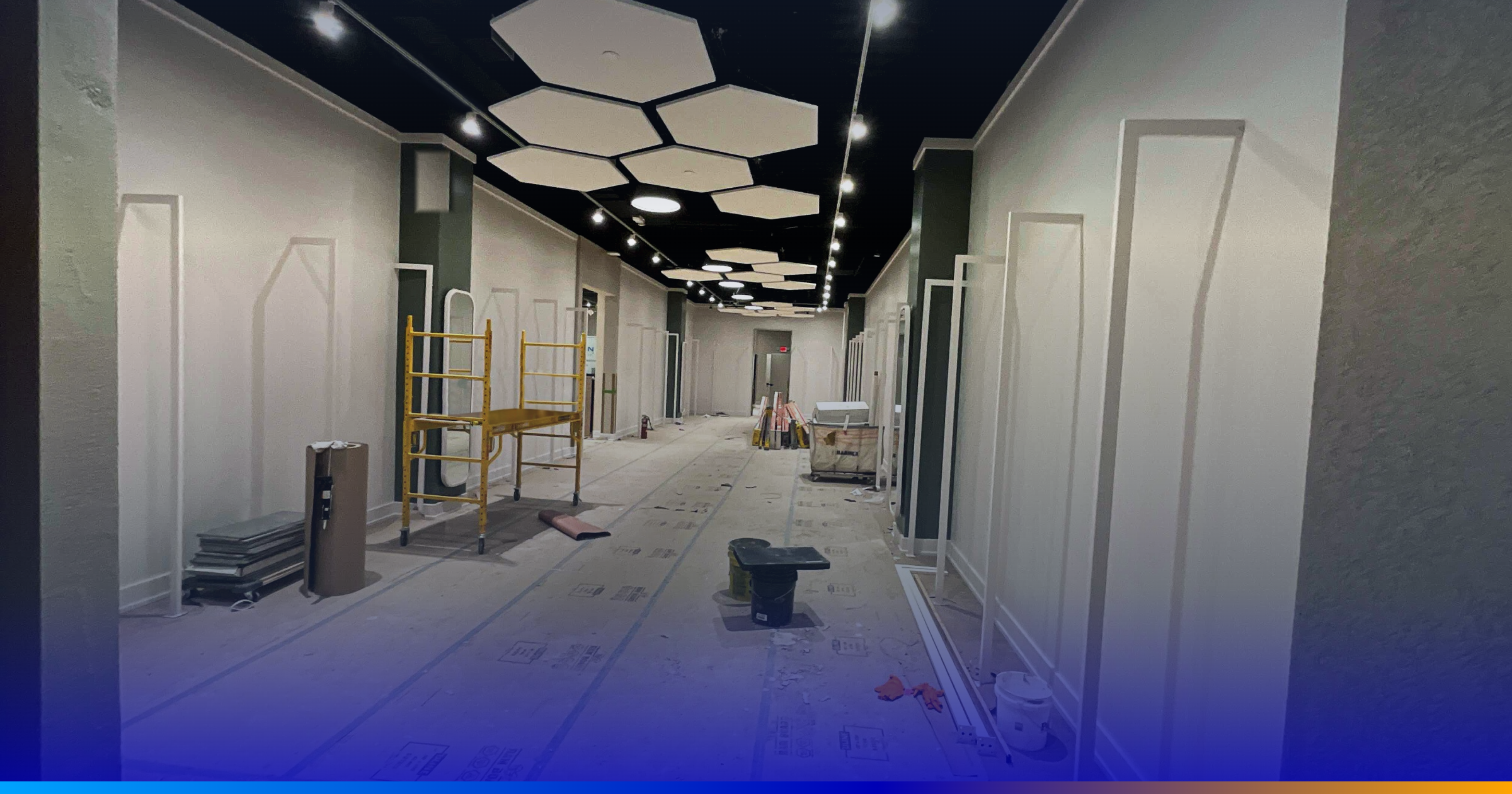
Savers, the largest for-profit thrift retailer in the U.S. and Canada, is a good example of one program that brings all of these demands together. CORCON has built a series of Savers stores across New York, Virginia and Maryland, most of them in large leased spaces of roughly 20,000 to 30,000 square feet.
A thrift store is a tenant improvement with a twist. Savers takes in donated goods, then sorts, prices and puts them on the floor, so every store is part sales floor and part processing operation. The program’s project notes point to the same priorities at each site:
- Light framing. New partitions are usually limited to offices and break rooms, so most of the effort goes into systems, floors and finishes rather than walls.
- Energy management. An energy management system oversees the mechanical and electrical systems across the large floor plate.
- Site work. Receiving donated goods is part of the business, so every build has to account for how Savers plans the donation drop-off and the shipping and receiving areas at each site. Every drop-off is different, and some locations are more challenging than others.
- Polished concrete floors. Installed for durability and easier maintenance under heavy daily traffic.
- Reclaimed pallet wallcovering. Reclaimed pallet materials line the walls at the point-of-sale area, a finish that echoes the reuse behind the brand.
Size, more than anything, sets the scope. A bigger store means more flooring, lighting, electrical and mechanical work, and more time on the schedule. That is what program thinking looks like in practice: the standard holds from store to store, with the same floors, finishes and systems approach, while the parts that change with every address, such as the drop-off layout, site access and the landlord’s existing building, are verified and planned location by location.
What Should Retail Construction Close-Out Include?
Close-out is when a construction project becomes a working store and a documented asset. It is also the phase most often rushed. A complete close-out should deliver:
- Punch list items completed before opening, or on a firm, written date
- Final inspections and the certificate of occupancy
- As-built drawings that reflect what was actually installed
- Operation and maintenance manuals, warranties and spare materials
- Final lien waivers and a reconciled final cost against the approved budget
- A walkthrough of building systems for the store or facilities team
For a rollout, ask that close-out packages arrive in the same format for every site and within a defined number of days after opening. Your facilities team will maintain these stores for years.
What Evidence Should You Request Before Selecting a General Contractor?
Every contractor says it delivers on time and on budget. Ask for proof. Before you select a partner for a rollout or remodel program, request:
- ☐ Comparable projects by service type (tenant improvements, open-store remodels, ground-up), with locations, dates and client references you can call
- ☐ Names and backgrounds of the proposed superintendent and project manager, and confirmation that they are employees
- ☐ A sample phasing plan from a remodel completed while the store stayed open
- ☐ A sample weekly report exactly as a client received it
- ☐ A sample change order log showing how changes were priced, approved and tracked against contingency
- ☐ Licensing in the states where your sites are located, and how permits are handled in each
- ☐ Safety record and certifications for site leadership
- ☐ A sample close-out package, including as-built drawings, warranties and manuals
- ☐ The process for capturing lessons learned between sites
- ☐ Bonding and insurance capacity sized to your full program, not one store
Go Deeper
For a longer list of interview questions, see 30 Questions to Ask Your General Contractor Before You Sign. Planning 20 or more sites? The Builder’s Toolkit includes a pre-construction checklist and permit timelines.
Which Type of General Contractor Fits Your Project?
- One tenant improvement in one market: a strong local or regional contractor can be the most efficient choice, provided it has worked under similar landlord requirements.
- Open-store remodels: prioritize documented phasing and overnight experience. Disrupted trading can quickly erase the savings from a lower bid.
- A multi-site rollout across states: look for a national contractor with its own field leadership, standardized estimating and reporting, and licensing in your markets.
- A ground-up prototype: confirm site development, shell and exterior experience, not just interiors.
- A mix of all three: one partner across service types keeps standards, reporting and lessons learned in one place.
Frequently Asked Questions
What is the difference between a tenant improvement and a remodel? A tenant improvement builds out leased space for a new occupant, often after the previous tenant has left. A remodel updates a store the brand already operates, frequently while it stays open. Tenant improvements carry more landlord and existing-building risk; remodels carry more operational risk.
Can a retail store stay open during a remodel? Yes. With a phased plan that divides the store into zones, moves disruptive work overnight and restores the sales floor each morning, most remodels can be completed without closing. The contractor should be able to show a written phasing plan from past work.
Should a national brand use one general contractor or several regional ones? Regional contractors bring local relationships but introduce variation in quality, reporting and cost. A single national partner with its own field leadership keeps the prototype, reporting and lessons learned consistent. Many brands use one primary national partner and add capacity only where needed.
What does a superintendent do on a retail construction project? The superintendent runs the site each day: sequencing trades, scheduling inspections, enforcing safety, checking quality and coordinating with store leadership. On a rollout, consistent superintendents are one of the strongest predictors of consistent stores.
How is a thrift or resale store build-out different from a typical retail store? A resale store is part sales floor and part processing operation. Beyond the customer-facing space, the build-out has to support a donation drop-off, receiving and back-of-house processing, with durable finishes such as polished concrete that stand up to heavy traffic. Site access matters more than usual, because donations and shipments move in and out every day.
What should I ask for before selecting a retail general contractor? Ask for comparable projects with references, the names of proposed field leaders, a sample phasing plan, a sample weekly report and change order log, licensing in your states and a sample close-out package.
Hold Every Contractor to This Framework, Including Us.
Since 1987, CORCON has delivered tenant improvements, open-store remodels and ground-up builds for national brands and multi-unit operators across 27 states, with our own superintendents on site in every market. Talk to our team about your next rollout or remodel, and ask us for any of the evidence above.